A Modular Approach to Automation
By Arnau Sala SolerPublished / 4 min readPart 1 of Modular Search Automation
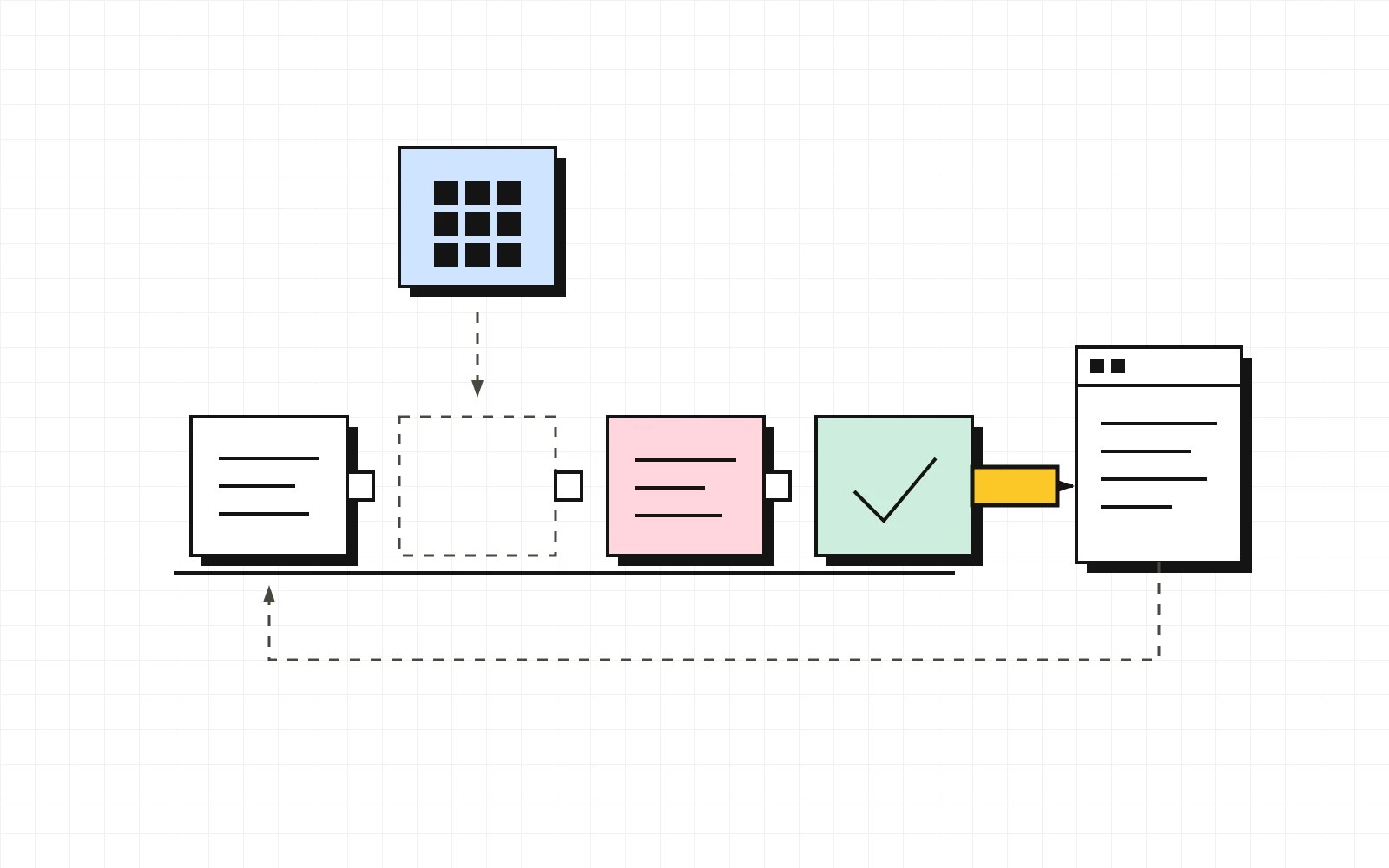
Trying to run a complete search optimization strategy with a single, massive AI tool often leads to frustration. When it works, it feels like magic. But when it fails, such as when an AI hallucinates a ranking metric or recommends optimizing a page that is already performing well, the entire system breaks down, and trust in the automation is lost.
The solution is to stop treating search automation as a monolithic black box. Instead, you can build a resilient, trustworthy engine using modular building blocks that snap together seamlessly, much like physical building blocks.
By separating the math from the strategy, this architecture lets you construct an automated system where you maintain absolute control over the logic, data, and execution.

Separation of Duties as Core Philosophy
To build a reliable system, you must assign distinct responsibilities to different types of components. The entire architecture relies on four fundamental rules:
- Calculators do the math: All data gathering, arithmetic, and threshold checks are handled strictly by rules-based code or scheduled workflows. Large language models are never used to compute a metric.
- AI provides the strategy: Once the data is mathematically verified and structured, AI agents read the clean evidence to diagnose problems, find patterns, and draft content strategies.
- Humans maintain oversight: Approval queues sit between the AI and your live environment, ensuring human specialists can review, adjust, or reject recommendations.
- Only one path executes: A single, highly controlled publishing component handles the actual deployment of approved changes to the live site.
The Four Building Blocks
Every part of this architecture fits into one of four functional categories. You can pick and choose pieces from each category to answer specific performance questions or address your unique strategy.
Configuration Hub
Centralized spreadsheets, configuration files, and reference tables where you define your target markets, competitor groupings, and performance thresholds. By storing your business logic and rules externally, they ensure these parameters are never hardcoded into operational tools, meaning you can update target audiences or competitor lists in a single file rather than rewriting your entire automation pipeline.
Data Pipelines
Scheduled, rules-based workflows (such as automated sequences built in tools like n8n) that connect to APIs to pull data, run mathematical calculations, and track changes. They ingest raw performance data, verify quality, and output a standardized data envelope containing only clean facts and metrics—guaranteeing that the underlying evidence is completely factual and reproducible before any AI ever reviews it.
AI Strategists
Large language models (such as customized AI skills or assistant plugins) designed to reason about the factual data prepared by your Data Pipelines. Because the heavy lifting of calculation is already handled, these models focus strictly on diagnosing root causes, clustering patterns, and drafting optimization strategies, virtually eliminating hallucinations regarding core metrics.
Human Review Queues
These user interfaces and review queues bridge the gap between automated reasoning and live execution by aggregating agent proposals into organized lists for human oversight. Specialists can review, edit, or approve recommended actions with a single click, enforcing technical guardrails so that no unverified or risky changes reach your production environment autonomously.
How the blocks connect
The Configuration Hub feeds the Data Pipelines, which pass clean data to the AI Strategists, then the Human Review Queues and one publishing path, which loops back to the Configuration Hub.
Configuration Hub
Markets, competitors and thresholds in one place.
Data Pipelines
Pull the data and do the math. Output clean facts only.
AI Strategists
Diagnose causes and draft strategy from verified data.
Human Review Queues
Review, edit or approve each recommendation.
Publishing Execution
One controlled path deploys approved changes.
01 SET THE RULES
Configuration Hub
Markets, competitors and thresholds in one place.
02 GATHER THE FACTS
Data Pipelines
Pull the data and do the math. Output clean facts only.
03 PASS JUDGMENT
AI Strategists
Diagnose causes and draft strategy from verified data.
04 APPROVE
Human Review Queues
Review, edit or approve each recommendation.
05 EXECUTE
Publishing Execution
One controlled path deploys approved changes.
EVERY CHANGE IS LOGGED FOR OUTCOME TRACKING / back to 01
How the Pieces Snap Together
Because every Data Pipeline is forced to output the exact same standardized data structure (carrying no prose and no opinions), they become universally compatible with your AI Strategists.
Here is an example of how you can snap these modular pieces together to build a custom intelligence workflow:
- Set the Rules: You update a centralized Configuration Hub template with your target market parameters and competitor domains.
- Gather the Facts: You run a scheduled Data Pipeline that reads your configuration, queries performance and market APIs, and mathematically computes your visibility gaps. It outputs a rigid, clean data file stating the exact factual changes.
- Pass Judgment: You connect an AI Strategist to read that specific data file. The AI reviews the clean evidence, diagnoses why a drop occurred, and drafts a targeted content recommendation.
- Approve and Execute: The recommendation lands neatly in your Human Review Queue. A team member reviews it, clicks “Approve,” and the system logs the change for future outcome tracking.
The Flexibility to Pivot
The true power of this modular design is future-proofing.
If your team decides to switch data providers or integrate a new API service, you do not need to rebuild your entire AI prompt library or rewrite your strategy logic. You simply swap out the individual Data Pipeline that handles the data pull. As long as the new block formats its output into the standard data envelope, your AI Strategist snaps right back onto it and continues working without missing a beat.
By treating search automation as a collection of connectable, single-purpose pieces, you can start small, building or downloading one block at a time, and scale up into a fully automated, transparent optimization engine tailored precisely to your needs.